
HISTORY
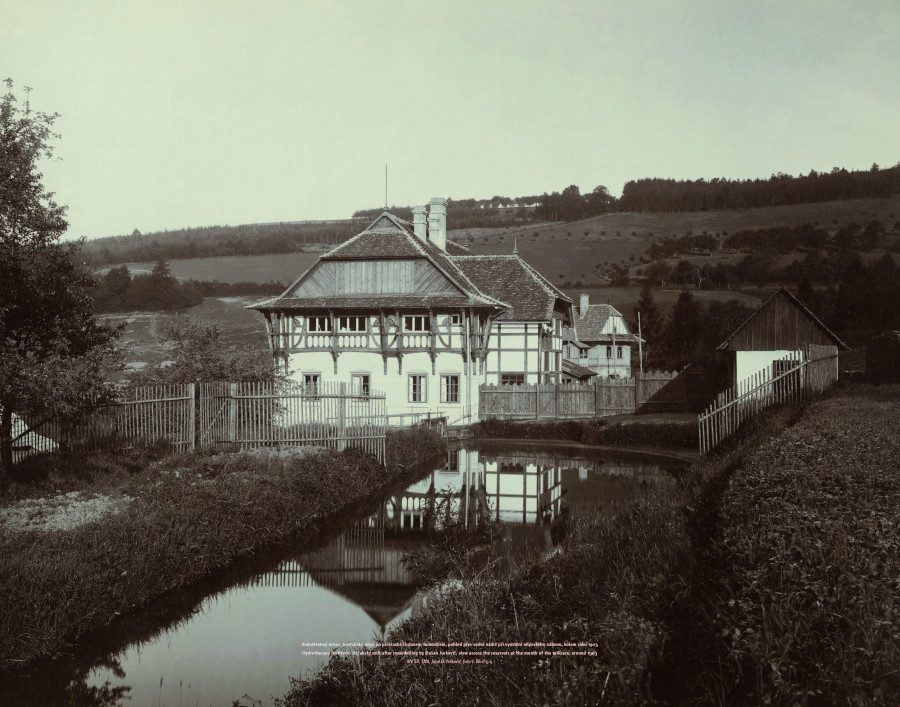
The history of this place began in 1710, when the subject Mikuláš Sedlář received permission from the lord of the manor, Wolfgang Serényi, to build a mill.
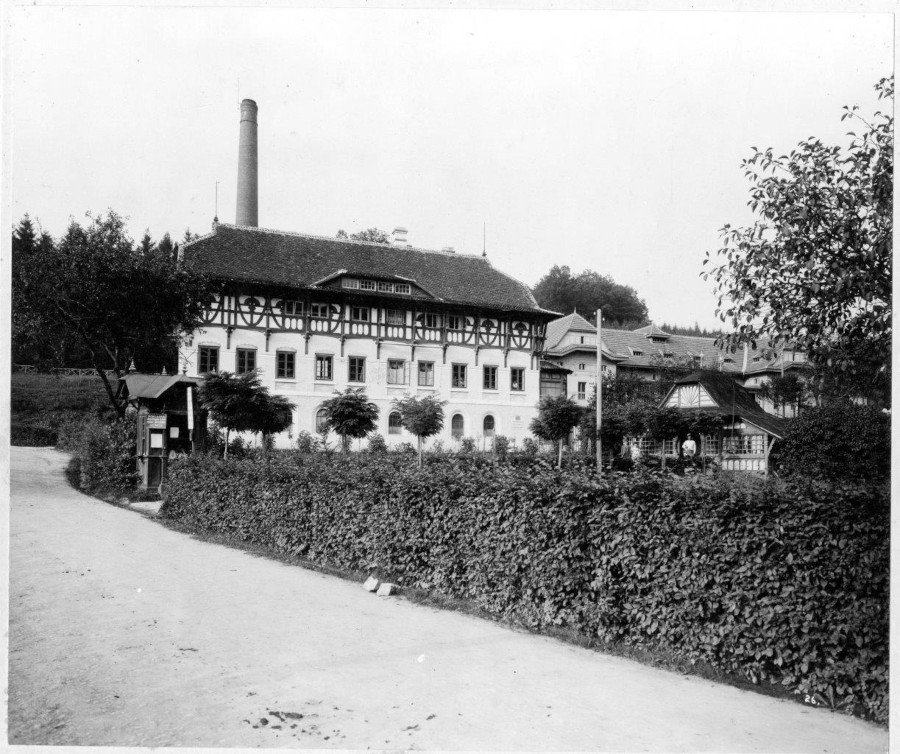
The mill, built at the foot of Mount Jestřabí, was powered by water from the Horní Olšava river and belonged to the Sedlář family for 150 years until 1860, when it was bought back by the then lords of the manor, the Serényi family.
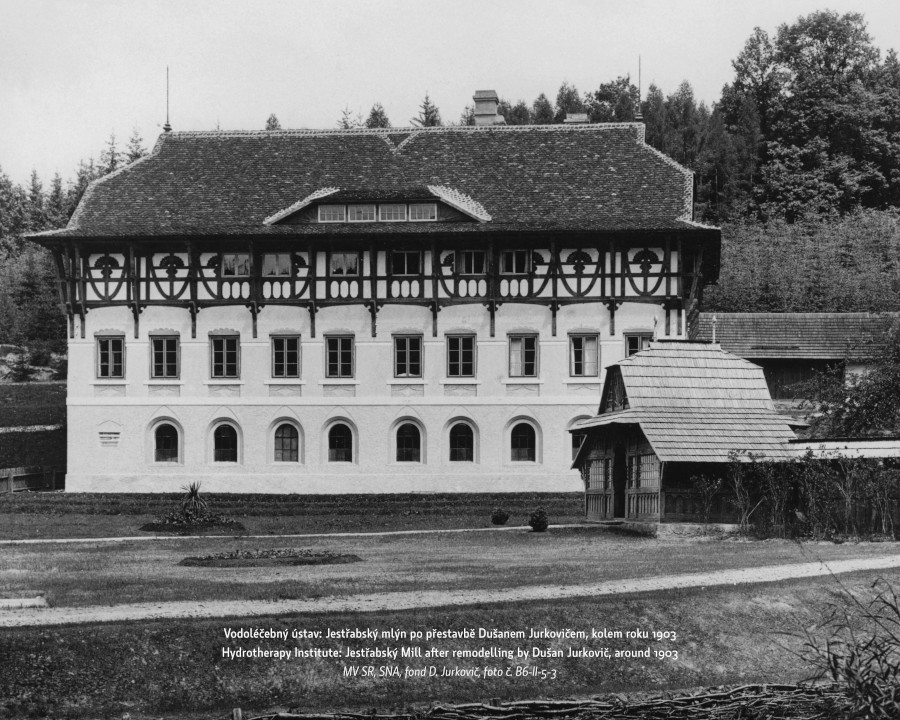
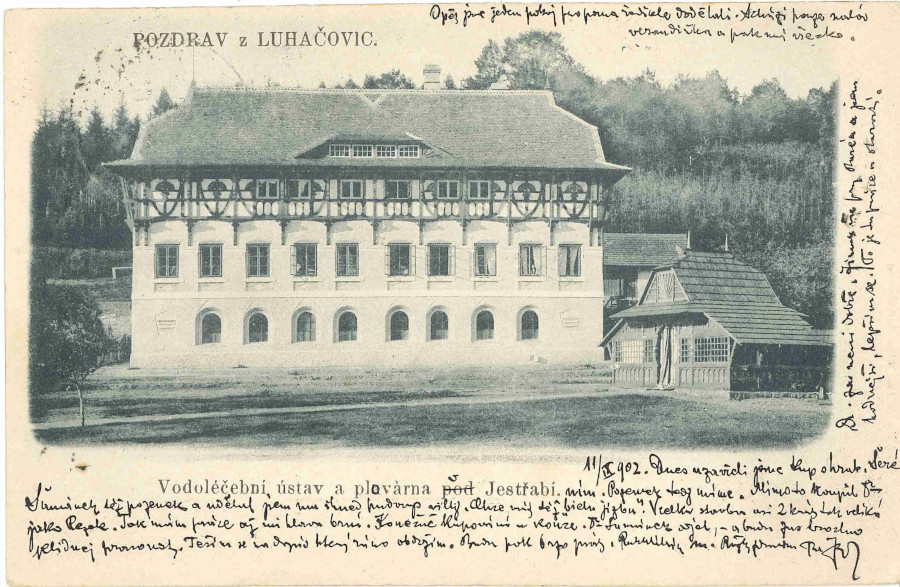
They, together with their other property, contributed it in 1902 to the first spa joint-stock company, founded by Dr. František Veselý. Architect Jurkovič was entrusted with the conversion of the mill into a Hydrotherapy Institute. This proceeded very quickly and the hydrotherapy facility was already open for the 1902 spa season, though the economy and short duration of the conversion meant that most of the older structures were preserved. Hydrotherapy operated in the building for approximately 100 years during which time several building modifications were carried out.
The Hydrotherapy Institute regained its original appearance only with the most recent renovation, completed in 2023, when an exhibition dedicated to the healing powers of natural springs, the music of Leoš Janáček and the architecture of Dušan Jurkovič was installed in the restored interiors.
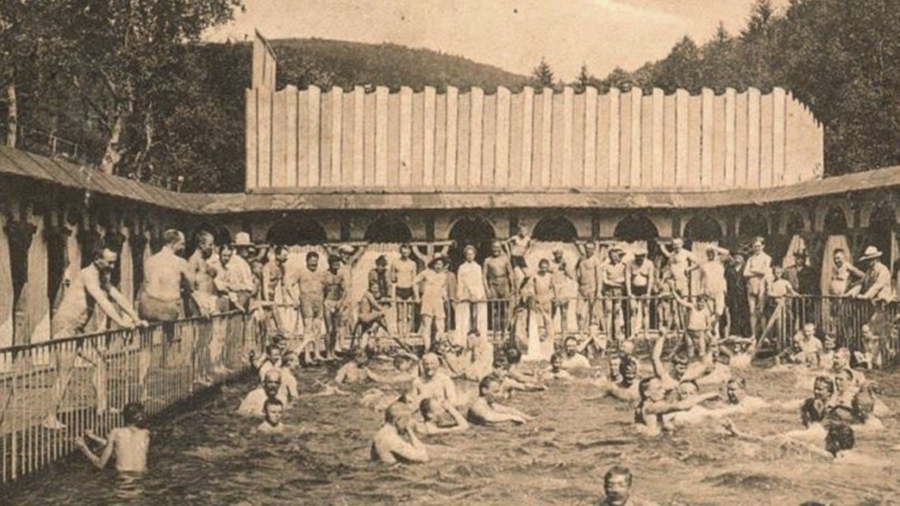
In the immediate vicinity of the Hydrotherapy Institute stand Jurkovič's River and Sun Baths, built the very following year. In their time, this public swimming facility with its pool and picturesque changing cabins was very popular. Various sporting competitions were held here and spa guests gathered here. At first, men and women took turns bathing and sunbathing; in 1910 the pool was extended and divided by a partition into a women's and a men's section. In the post-war period, the Sun Baths section was also enlarged. The pool remained in operation until 1995, when the method of supplying the pool with river water no longer met hygiene regulations. Today an ornamental biotope has been created here.
Two further buildings in the complex follow the vocabulary of Jurkovič's architecture. The first is the former spa laundry with boiler room from 1909, built by Josef Schaniak, which now serves as the entrance to the museum exhibition. The second is the monumental Peat and Sulphur Baths building by architect Jan Koča from 1909. In 1941, an extension to the Peat Baths was begun by architect Adolf Vítámvás and operations were expanded to include the Sulphur Baths. Today the building has been converted into a greenhouse for overwintering heat-loving plants from the spa park and in the summer season it serves cultural and social events.
The entire successful project of restoring the historic complex has revived a place that had been falling into disrepair for many years and brought new life to the heart of this spa town.